



Photocatalysis as an active system for urban surface preservation
Regardless of the level of pollution to which a surface is exposed or the material from which it is made, Global Engineering’s photocatalytic treatments activate a continuous oxidation process that prevents the progressive accumulation of dirt.
The mechanism is neither superficial nor film-forming: it is not a passive barrier, but a light-activated chemical reaction.
Polluting substances — nitrogen oxides, fine particulate matter, carbon residues and organic compounds — are progressively decomposed before they can accumulate on the surface.
This prevents the formation of persistent darkening and helps maintain a more uniform appearance of the treated substrate over time.
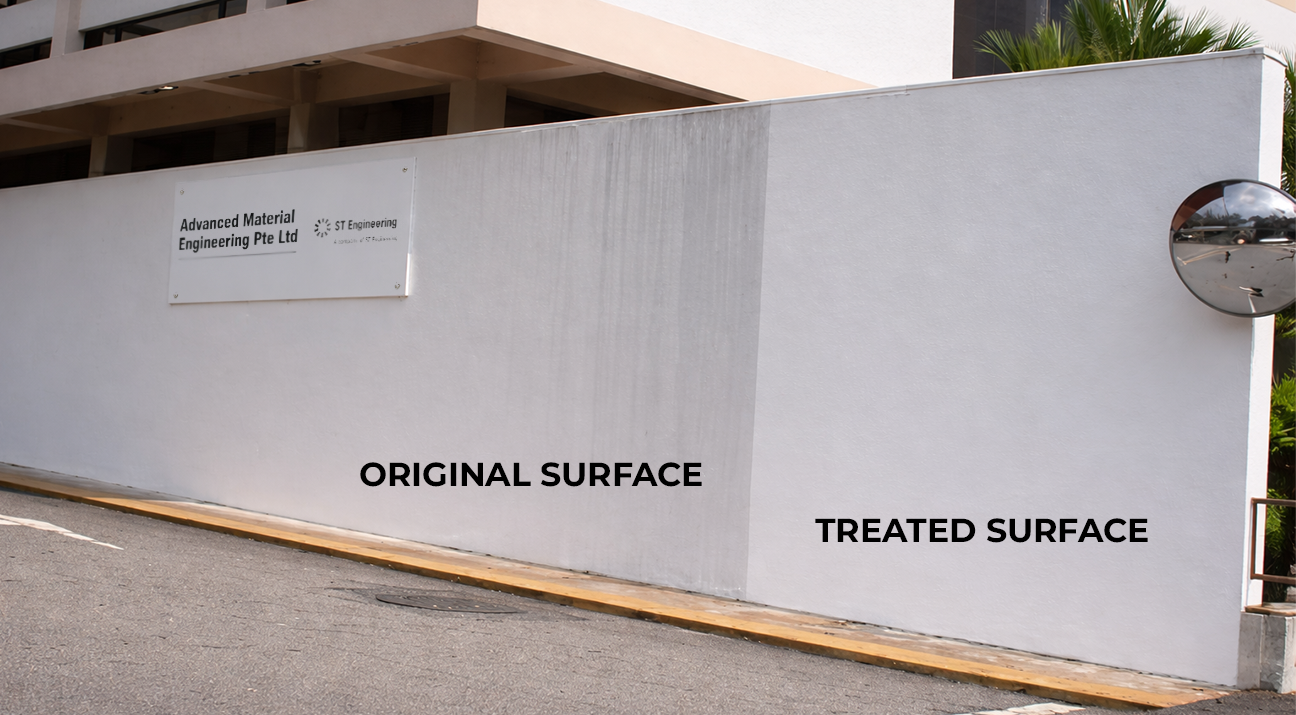
When comparing an untreated wall with a photocatalytically treated surface in a highly polluted urban environment, the difference becomes evident over time.
The untreated surface gradually accumulates deposits, while the photocatalytic surface maintains a cleaner visual appearance.
The effect is the result of a continuous active process that uses natural light as an energy source to trigger oxidation–reduction reactions.
Application evidence – Comparative test on an urban wall two months after treatment
The “cloth test”
A simple yet highly indicative test consists of wiping a cloth over surfaces exposed to pollutants.
of the level of pollution to which a surface is exposed and the material from which it is made, surfaces treated with a photocatalytic coating show a behaviour that is markedly different from traditional substrates. Dirt cannot adhere and consolidate over time, as it is broken down before it can accumulate in stratified layers.
A simple yet highly indicative test consists of wiping a cloth across surfaces exposed to atmospheric pollutants.
Regardless of the level of pollution or the type of material, surfaces treated with photocatalytic coatings exhibit a markedly different behaviour compared to conventional materials. Dirt cannot adhere and consolidate over time, as it is decomposed before it can accumulate in layers.
Antisporcamento – Realizzazioni sottopasso di caricamento Genova
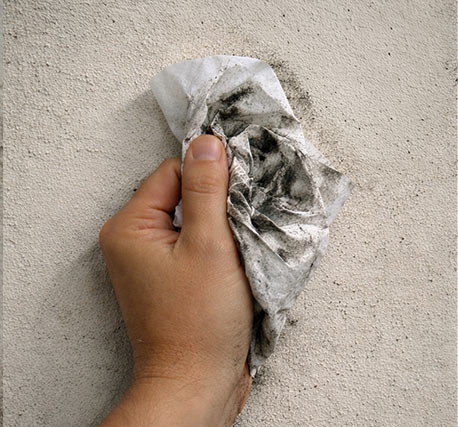
Reference white – traditional paint
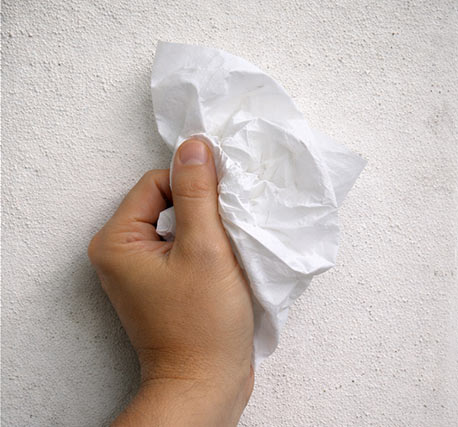
EcoPittura – eco-active photocatalytic coating