



From theory to experimental verification
The physicochemical principles underlying photocatalysis are directly confirmed by experimental tests conducted on treated materials and surfaces.
The oxidative activity triggered by titanium dioxide, described in the previous sections, is not limited to a theoretical model but can be measured through microbiological testing and comparative experiments.
The combined action of light and oxygen generates highly reactive species capable of interacting with microorganisms, organic compounds and biological contaminants present on surfaces.
These phenomena can be observed and documented through bacterial cultures, comparative material tests and simple demonstrative experiments that make it possible to evaluate the effectiveness of photocatalytic treatment over time.
The images and tests presented below provide concrete examples of these experimental verifications and demonstrate how photocatalysis translates into a real, repeatable antibacterial action activated by light.
Light-activated antibacterial action
Microbiological evidence of photocatalysis
The comparison between a conventional surface and one treated with photocatalytic material shows different behaviour in the presence of microbial cultures. In untreated samples, the growth of bacteria and fungi spreads to the edges of the support. In photocatalytic samples, however, a uniform inhibition halo can be observed around the treated surface. This phenomenon indicates the oxidative activity triggered by natural or artificial light on the titanium dioxide present in the material. The effect is neither superficial nor temporary: the reaction occurs every time the material is exposed to light.
In the direct comparison between samples, the antibacterial influence of photocatalysis becomes even more evident.
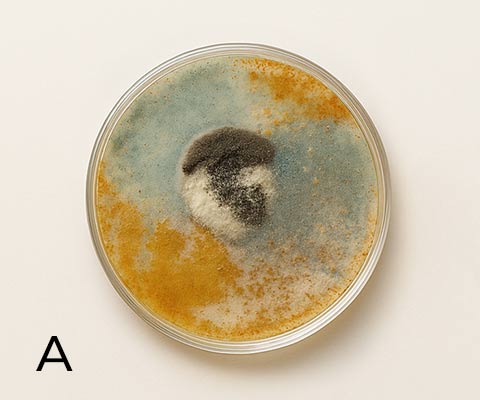
In sample “A”, the greenish areas, dark masses and alterations in the ochre surface indicate a significant presence of bacteria.
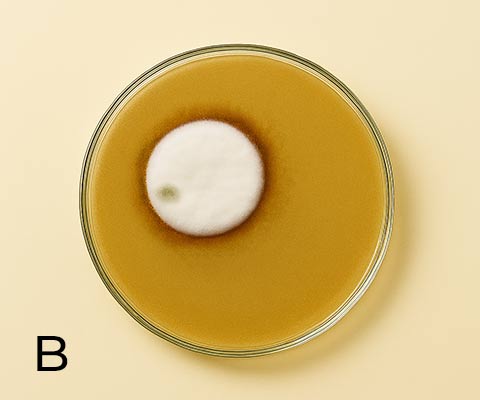
In sample “B”, it can be observed that the bacteria have completely disappeared.
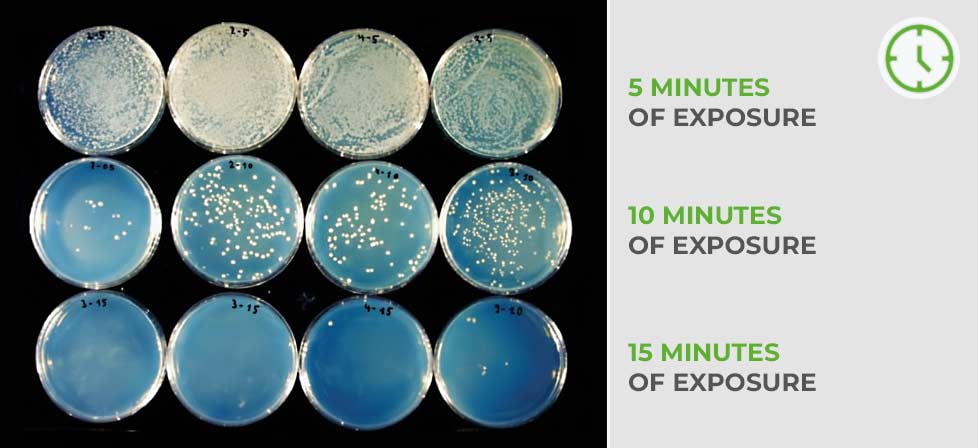
In the culture plates it is possible to observe the progressive reduction of bacterial load.
The active principle: photocatalytic oxidation
When titanium dioxide (TiO₂) is irradiated by light with sufficient energy, a process of heterogeneous photocatalysis is activated, generating highly reactive species such as hydroxyl radicals (•OH) and superoxide ions (•O₂⁻).
These oxidizing species react with organic compounds and with cellular membranes present on the surface, leading to their progressive decomposition and disintegration.
The process occurs at room temperature, without the use of additional chemical substances.
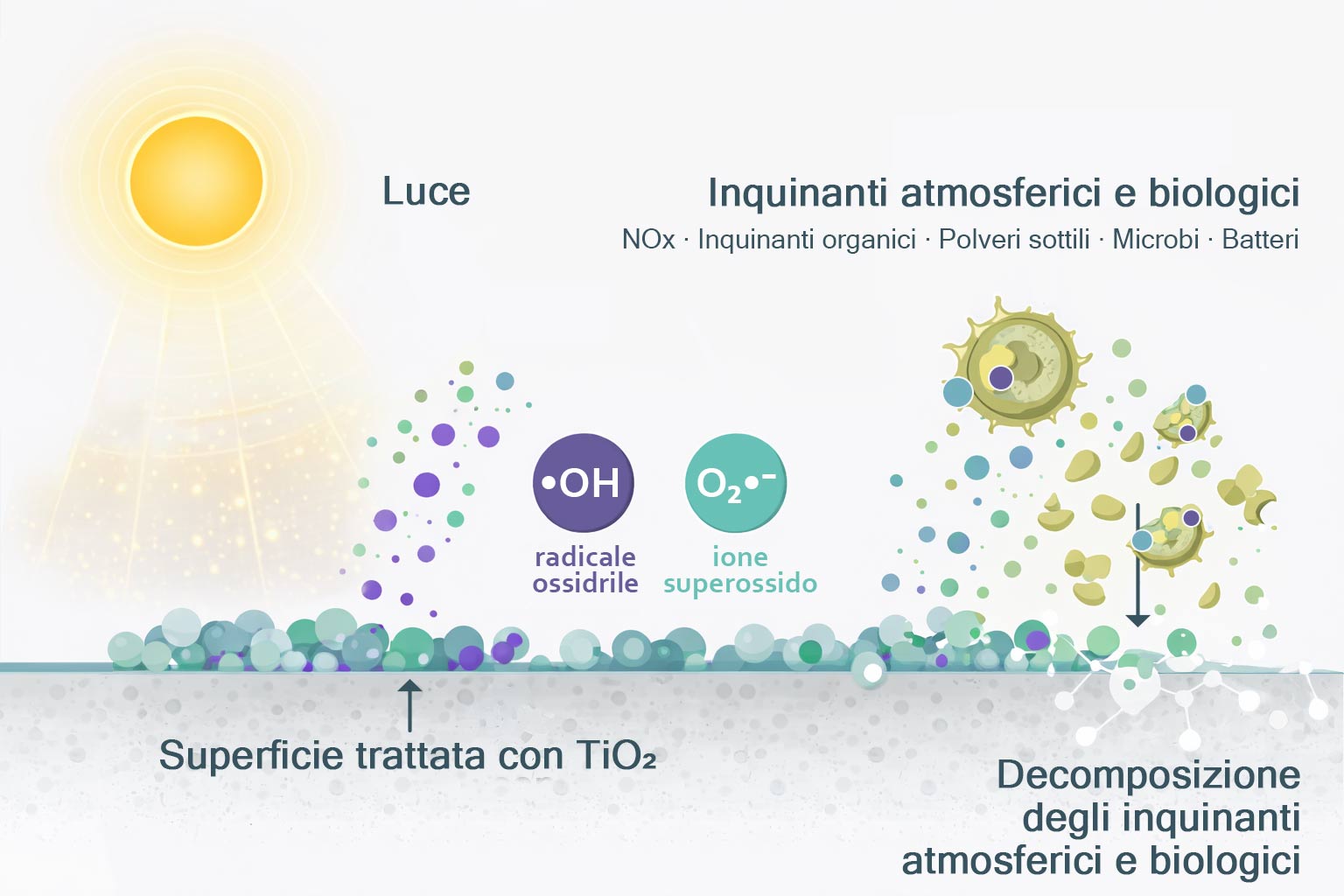
Activated TiO₂ generates oxidizing species capable of degrading pollutants and biological contaminants.
Experimental demonstration: the apple test
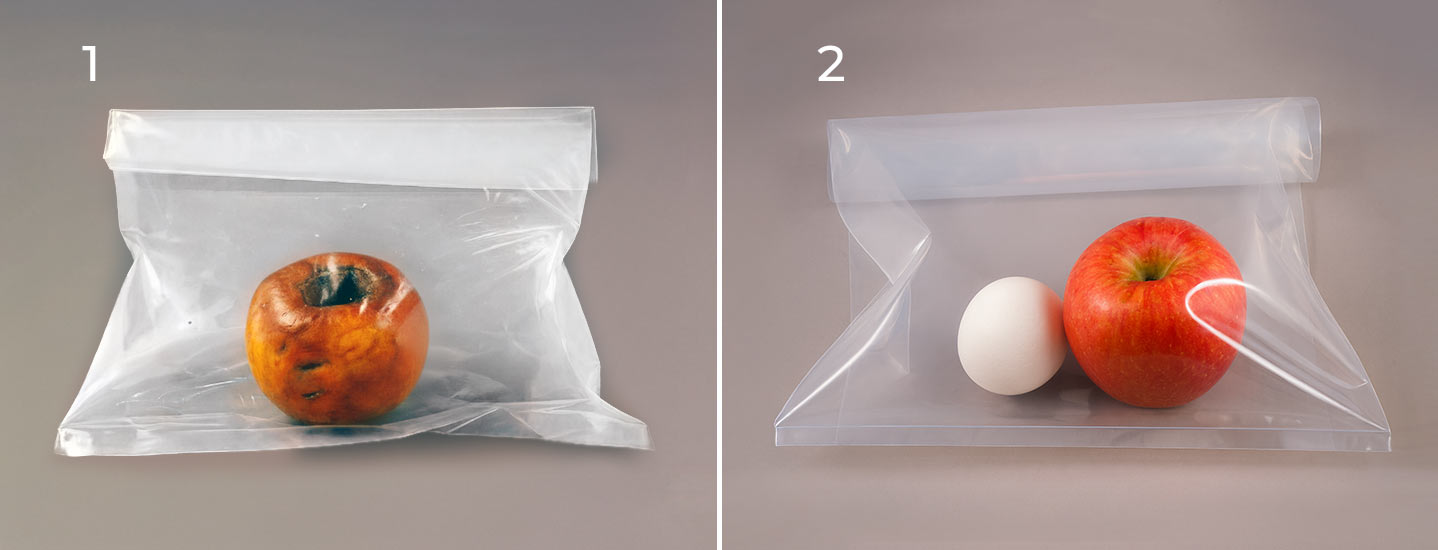
In the following photographs the result of a particularly interesting experiment is clearly visible. Two apples were placed in sealed bags at the same time.
To one of them, an egg coated with photocatalytic paint was added (FIG.2). The apple naturally produces ethylene, a hormone that promotes ripening but also accelerates decay.
The fruit that was not sealed with the treated egg (FIG.1) progressed from the ripening phase to decay.
In the second image (FIG.2), however, it can clearly be seen how the presence of the treated egg prevented the apple from rotting. The process is analogous to the previously shown destruction of bacteria in culture.
Areas of application
The antimicrobial properties of photocatalytic coatings also find application in:
In the absence of natural light, suitable artificial light sources can be used to activate the process.